
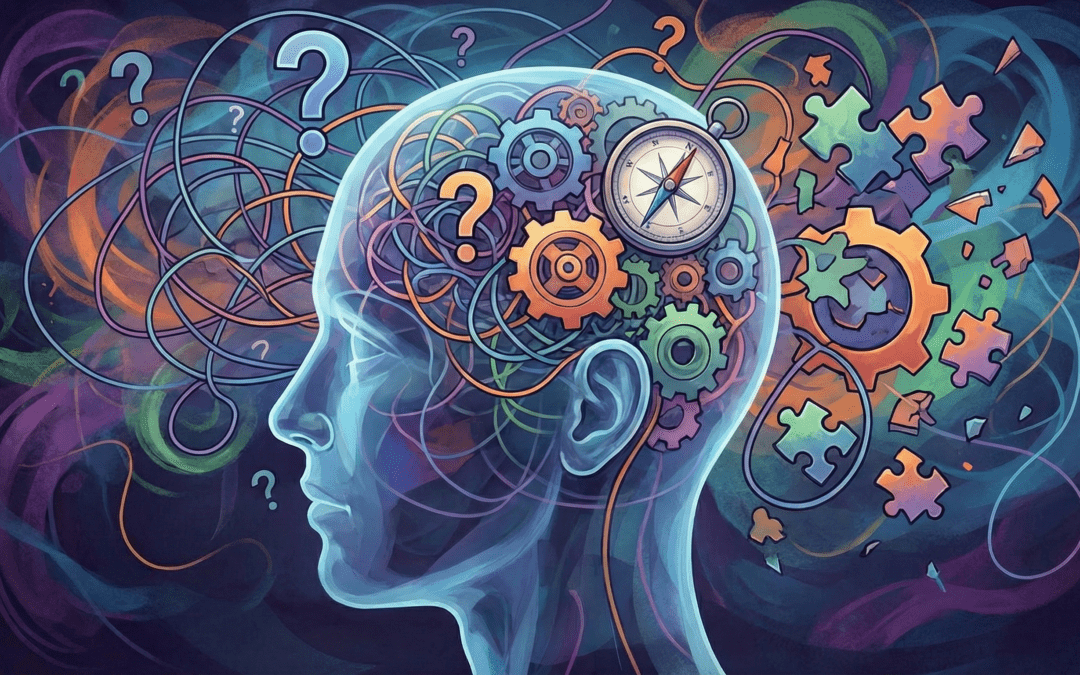
What Is ADHD?
ADHD is more than a list of symptoms. It’s is a natural neurological variation present from birth. It means the brain’s regulation systems favor certain processing styles over others.
Some ADHD brains seek stimulation and novelty. Others struggle to maintain mental engagement when the brain isn’t sufficiently activated. This explains why someone might seem inattentive in routine situations but deeply focused when something truly captures their interest.
Because ADHD reflects a neurological pattern, not a personality flaw, two people with ADHD may look completely different on the surface. One may outwardly struggle with restlessness and impulsivity. Another may appear calm and reserved while internally battling mental exhaustion and disorganization.
What Are the Signs of ADHD in Real Life
Adults and teens with ADHD describe living with a constant sense that they’re working harder than others just to keep up, even though their effort isn’t visible to others. Some of their struggles include:
- Knowing what needs to be done, but struggling to initiate tasks
- Losing track of time or underestimating how long things take
- Feeling mentally overwhelmed by decisions
- Forgetting appointments, deadlines, or details despite genuine effort
- Hyper-focusing on things of interest, but drifting away from less engaging tasks
- Experiencing emotional intensity—quick frustration, rejection sensitivity, or burnout
- Repeatedly feeling behind or out of sync with peers
Why ADHD Is Often Missed in Children
Many people are never diagnosed during childhood. If a child wasn’t disruptive or hyperactive, their difficulties may be overlooked. Quiet students who stared out the window, lost assignments, or procrastinated weren’t flagged. They may be called:
- “Daydreaming”
- “Not trying hard enough”
- “Lazy”
- “Unmotivated”
In reality, they were navigating unrecognized neurological challenges. Especially those with primarily inattentive presentations, and not hyperactive.
Highly intelligent children learn to manage ADHD symptoms through a lot of extra effort, such as working longer hours or becoming a perfectionism. This is called masking, because their extra effort conceals their difficulty. Others don’t always take notice of their stress, fatigue, or self-doubt from constantly pushing against their neurology.
Many adults don’t realize they have ADHD until life becomes more demanding that their learned coping skills can handle. A new position at work, a change of career, or increased responsibilities can result in burnout that prompts adults to wonder.
Does ADHD Get Worse With Age?
ADHD itself doesn’t “progress” in the way degenerative conditions do. But how the symptoms affect your life can change over time.
Some adults become better at managing their challenges as they build routines, discover what works for them, and refine personal coping strategies. For these individuals, ADHD feels more controlled as they mature.
For others, the opposite can occur. The increasing complexity of adult life can overwhelm coping systems that once worked, leading to struggles with organization, emotional regulation, or follow-through. Sometimes, advanced age can make the same coping strategies, used for years, feel more and more taxing.
In other words, the brain doesn’t worsen, but the environment’s demands evolve. Whether symptoms feel easier or more difficult over time depends on the balance between neurological traits and life stressors.
Can ADHD Be Cured?
There is currently no “cure” for ADHD, because it isn’t a disease. It’s a neurological style. The brain doesn’t need to be fixed, it needs to be understood and supported.
That said, ADHD can be treated very effectively.
- Medication can significantly improve focus, emotional regulation, and impulse control for many individuals.
- Skill-building strategies help people design systems that work with their brain rather than against it.
- Accurate assessment provides clarity about specific neurocognitive patterns, allowing treatment to be personalized rather than generic.
Once people understand how their brain functions and learn practical ways to support it, daily life can becomes less exhausting and confusing. Treatment doesn’t change who you are. It helps you function more fully as yourself.